
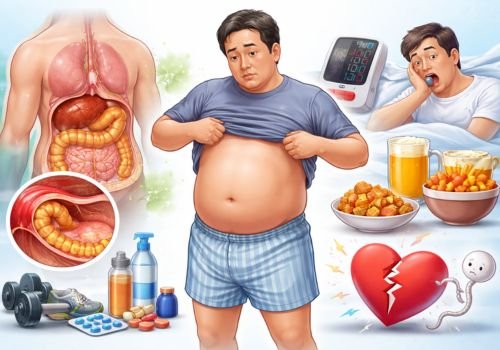
Visceral fat and erectile dysfunction are closely connected health problems affecting many men today. Excess belly fat can damage blood vessels, reduce testosterone levels, and significantly affect male sexual health and performance.
Visceral Fat and Erectile Dysfunction in Men
Excess visceral fat around the abdomen can interfere with hormone balance and blood circulation. This condition increases the risk of erectile dysfunction and other metabolic diseases in men.
Visceral Fat: The Hidden Threat Inside the Abdomen
Not all body fat behaves the same way. The fat that accumulates deep inside the abdomen—known as visceral fat—surrounds vital organs such as the liver, pancreas, and intestines.
Unlike fat under the skin, visceral fat is metabolically active and can disrupt many important biological processes.
When visceral fat increases, it can lead to:
- Chronic inflammation in the body
- Insulin resistance
- Hormonal imbalance
- Damage to blood vessel function
Over time, these changes affect the cardiovascular system, hormone production, and nerve signaling—three key elements required for healthy male sexual function.
Why Belly Fat Can Affect Sexual Performance
A healthy erectile response depends on coordination between the brain, nerves, blood vessels, and hormones.
One critical component in this process is nitric oxide (NO), a molecule that allows blood vessels to relax and expand so that blood can flow efficiently.
When visceral fat accumulates:
- Nitric oxide production decreases
- Blood vessels become less flexible
- Blood circulation to the penis becomes weaker
Because the penile arteries are extremely small, even slight damage to blood vessel function can lead to erectile difficulties.
In many cases, erectile dysfunction can even appear before major cardiovascular symptoms, making it an early warning sign of underlying health problems.
Hormonal Imbalance Caused by Excess Fat
Excess body fat also disrupts the balance of hormones in men.
Fat tissue can convert testosterone—the primary male hormone—into estrogen, which is typically associated with female physiology.
When testosterone levels decline, men may experience:
- Reduced libido
- Persistent fatigue
- Loss of muscle mass
- Decreased physical motivation
These changes can gradually create a cycle where lower energy leads to less physical activity, which in turn promotes further weight gain.
Belly Fat and the Risk of Metabolic Disease
A large waistline is often associated with metabolic syndrome, a group of conditions that significantly increase the risk of serious diseases.
These conditions include:
- High blood pressure
- Elevated blood sugar levels
- Abnormal cholesterol levels
Together, these factors accelerate atherosclerosis, a process where arteries become hardened and narrowed.
This increases the risk of:
- Heart disease
- Stroke
- Circulatory disorders
Because penile arteries are smaller than coronary arteries, erectile dysfunction may appear earlier than other cardiovascular symptoms.
Sleep Problems Linked to Abdominal Obesity
Many men with excess abdominal fat also suffer from sleep apnea or severe snoring.
In sleep apnea, breathing repeatedly stops during sleep, causing oxygen levels in the blood to drop.
This can lead to:
- Poor sleep quality
- Daytime fatigue
- Reduced concentration
- Hormonal disruption
Over time, poor sleep further worsens metabolic health and may contribute to declining male vitality.
Quick Fix Products Are Not the Real Solution
Some men attempt to solve sexual performance issues through quick solutions such as sprays, pills, or unregulated supplements.
However, medical professionals warn that using such products without proper evaluation can be risky—especially for individuals with underlying cardiovascular conditions.
Temporary solutions may mask symptoms but do not address the root cause.
Lifestyle Changes Can Restore Health and Vitality
Improving metabolic health and reducing visceral fat can significantly improve overall well-being and sexual function.
Key lifestyle strategies include:
- Reducing refined carbohydrates and sugary foods
- Limiting alcohol consumption
- Maintaining a balanced daily calorie intake
- Exercising at least 150 minutes per week
- Combining strength training and cardiovascular exercise
- Prioritizing consistent, high-quality sleep
Many men notice significant improvements in energy, confidence, and sexual health once abdominal fat decreases and metabolic indicators improve.
A Healthy Waistline Supports Long-Term Male Health
Middle age does not have to mean declining vitality. On the contrary, it can be the perfect time to adopt healthier habits that support long-term well-being.
Sometimes, reducing just a few centimeters from the waistline can lead to meaningful improvements in energy levels, cardiovascular health, and sexual confidence.
Maintaining a healthy body is not simply about appearance—it is about protecting the quality of life for years to come.
👉 Please explore the sexual health products and professional care services available on our website “Sex Care for Life” to support your long-term sexual and urinary health and well-being.

One thought on “Visceral Fat and Erectile Dysfunction: How Belly Fat Damages Men’s Health”